Legionella Risk Assessments

Legionella Risk Assessments in Uttoxeter & Surrounding Areas

Legionella control is risk-based: what a property needs depends on its water system, how it's used and who is responsible for it. We assess domestic hot and cold water systems, record what we find and set out practical recommendations, so landlords and homeowners can make informed decisions.

Serving Uttoxeter and nearby towns in Staffordshire and Derbyshire. Coverage and appointments are confirmed using your postcode.

Example paperwork

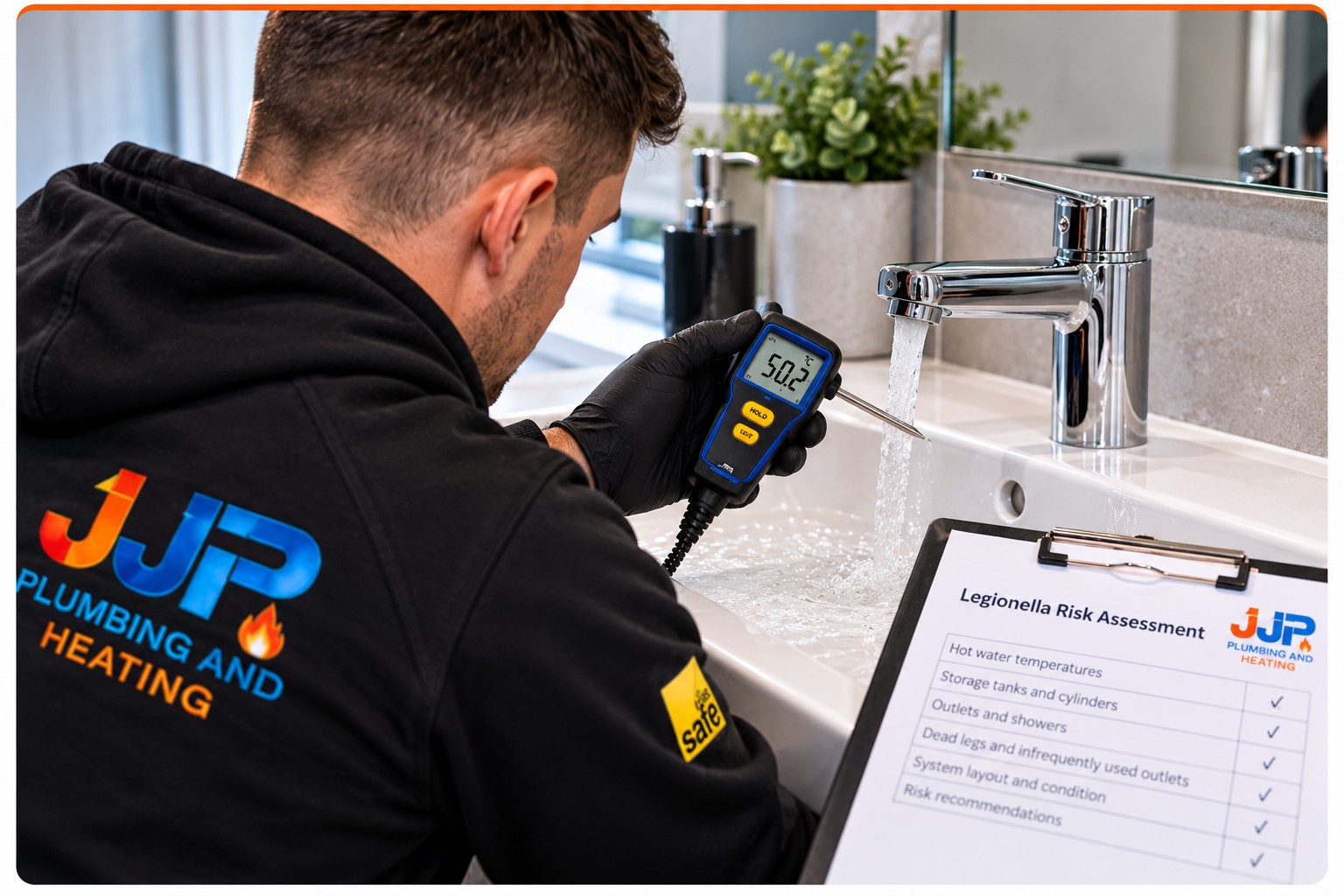
Your legionella risk assessment record.

A legionella risk assessment records the water system, temperatures, storage tanks and recommendations. This sample shows the sections it contains, with fictitious details — it is not evidence of compliance for any property.

Every document above is a sample with fictitious details, shown so you know what to expect. None of them is a valid certificate, a completed inspection or a record for any real property.

What we cover

  • Description of the hot and cold water system
  • Hot and cold outlet temperature checks
  • Cold water storage tank inspection where present
  • Hot water cylinder and calorifier checks
  • Showers, mixing valves and infrequently used outlets
  • Dead legs and little-used pipework identified
  • Written findings, risk observations and recommendations

Why JJP

  • Practical, risk-based approach
  • Clear written findings and recommendations
  • Easy to combine with a landlord gas safety check

What the assessment covers

The assessment describes your water system and how it's used: where water is stored, how it's heated and which outlets are used regularly. Hot and cold outlet temperatures are checked, because legionella bacteria multiply within a particular temperature range.

Storage tanks, cylinders and calorifiers are inspected where present, along with showers, thermostatic mixing valves, dead legs and outlets that are rarely used. Findings are recorded with recommendations proportionate to the risk found.

Who needs one, and how often

Landlords have a duty to assess and control the risk of legionella exposure in their rental properties, but the law doesn't prescribe a particular certificate or a fixed annual assessment for every property. What's appropriate depends on the premises, the water system and the people using it.

Simple domestic systems with a combi boiler and no storage tanks generally present a lower risk than systems with stored water. The assessment helps you understand your own property rather than applying a one-size-fits-all rule.

What the assessment is — and isn't

A risk assessment records the condition of the water system and recommends sensible control measures. It isn't a guarantee that water is free of legionella, and it doesn't replace ongoing good practice such as keeping hot water hot, cold water cold and flushing little-used outlets.

If the assessment identifies improvements — removing dead legs, adjusting temperatures or servicing a cylinder — we'll explain them clearly and can quote for any work you choose to proceed with.

What to tell us

The property postcode, the type of water system (combi boiler, cylinder, stored cold water), how many outlets it serves and whether the property is occupied or empty. Send your details and postcode and we’ll arrange the right visit.

Common questions

Is a legionella risk assessment a legal requirement for landlords?

Landlords have a legal duty to assess and control the risk of legionella exposure, but the law doesn't require a specific certificate or a fixed annual assessment for every property. What's needed depends on the premises and the water system. HSE guidance explains the duty in more detail.

Does my property need one if it has a combi boiler?

Combi systems with no stored water generally present a lower risk, because water isn't held at warm temperatures in tanks. An assessment can still be useful to confirm the arrangements, especially where outlets are infrequently used or the property is sometimes empty.

Does a risk assessment guarantee the water is safe?

No. An assessment records the system and its risks at the time and recommends control measures. Day-to-day management — temperature control, regular use of outlets and flushing after vacancy — remains important.

What happens if the assessment finds a problem?

We'll explain the finding and the recommended action, such as removing redundant pipework, adjusting stored water temperatures or servicing a cylinder. Any remedial work is quoted separately and only goes ahead with your agreement.

Can it be done at the same time as a gas safety check?

Yes, the two can often be combined in one visit. Mention both when you enquire and we'll arrange the appointment to suit.

Customer feedback

What Our Customers Say

Read our reviews on Google

Google customer reviews reproduced from JJP’s existing website · Static collection, checked 17 October 2026.

Discuss legionella risk assessments

Based in Uttoxeter, covering Burton upon Trent, Ashbourne, Cheadle, Stafford and nearby villages. Tell us about the work and your postcode.

Call WhatsApp